As a lifelong sports fanatic who has been removed from everything familiar, including the abundant outlets that fulfilled my need to watch, listen to, and talk about sports, I needed to find an avenue to satisfy this necessity. With no one to rant to, I thought a blog would be good idea. It's essentially the discussions I would have in the pub with my friends, and since they're not around, and neither is the six consecutive hours of Sportscentre in the morning, this is the next best thing.
Showing posts with label Manchester United. Show all posts
Showing posts with label Manchester United. Show all posts
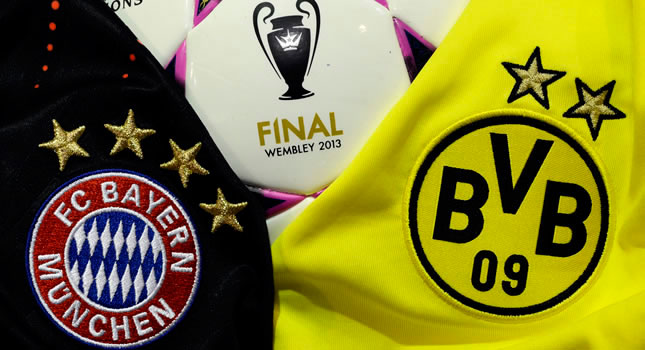
Tonight sees Bayern Munich take on unlikely finalists Borussia Dortmund in the final for the world's most prestigious club competition. Like the majority of the world, I too am disappointed.
I haven't been this disinterested in a Champions League final since Porto met Monaco in 2004. In fact, I'm more excited at the 8-pack of mixed meat hot dogs that awaits me in my fridge for dinner and cost 1 euro at the local supermarket.
Outside of Germany, I imagine most football enthusiasts feel the same.
Both teams field exceptional talent and play an entertaining brand of football, however the final isn't the same if two continental juggernauts don't meet in the end.
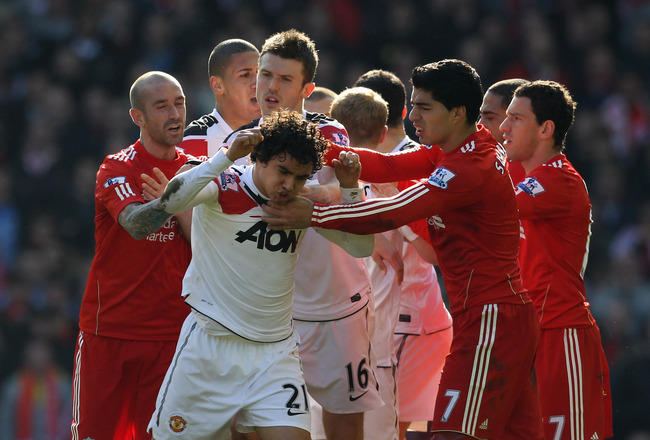
In addition, it's not the same if the final is a match that is played twice yearly in the less glamorous Bundesliga. The whole allure of Champion's League is watching two elite teams play a match of extreme importance when they otherwise wouldn't have the opportunity to meet each other in competitive play. The only exceptions are if two eternal rivals meet in the final such Barcelona and Madrid, or Manchester United and Liverpool due to their rich history of hating each other.
A final that could just as easily be a German cup matchup will yield as much excitement as the most intense German cup matchup can muster - very little. I don't even know what the German cup is called. That should tell you how awesome the German cup is.
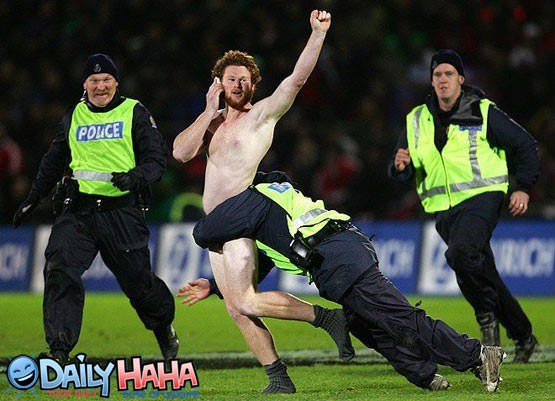
Regardless, I'll still watch the match and eat my cheap but delicious hot dogs with little enthusiasm, unless of course someone runs onto the field with a funny t-shirt or no t-shirt at all; that's always fun.
After losing out on a second consecutive title to local
rivals Manchester United and having been embarrassed in the FA Cup finals by
lowly Wigan Athletic, the brass at Manchester City has relieved Roberto Mancini
of his responsibilities.
In a statement on the official Manchester City website, the
club defends their decision by saying that, “the Club has failed to achieve any
of its stated targets this year, with the exception of qualification for next
season’s UEFA Champions League.”
This, I can understand. The club has been bankrolled by
Sheikh Mansour, a multi-billionaire who has taken the Roman Abramovich approach
to building a champion and showered City with unlimited resources, allowing
them to compete with Europe’s elite by buying the best talent available and
stockpiling superstars.
Mancini has not performed to the level expected of him with
the resources he has been given. He performed poorly in the coveted Champions League
and has failed to win any silverware this year. With the money he has had
available and the players he decided to buy, he underachieved according to the
board’s evaluation, and they are entirely justified in dismissing him.
However later in their statement, Manchester City also cite the
‘need to develop a holistic approach’.
They don’t describe what they mean by a ‘holistic approach’,
they just kind of throw it in there.
There has been a lot of speculation as to what exactly those
sharp guys in baby blue ties were trying to say. Some think it was a comment on
Mancini’s limited attention to defense and man marking. Others believe it was a
reference to his public disputes and differences with select players.
My interpretation of this from whichever PR staffer who had
his thesaurus handy while he was writing this press release, is that Man City
wants to build a total club, not unlike that of Barcelona. They want a
philosophy; a unique style; a system; a tradition of winning. But therein lies
the problem – a total club takes time and requires patience.
To build a club like Barcelona, Manchester United, Real
Madrid, or Bayern Munich – arguably the supreme of Europe’s footballing kingdom
– a unique and specific philosophy is needed.
In Barcelona, the philosophy is purely about football –
movement, possession, and creativity with one or two touch passing.
At Real Madrid, the philosophy extends beyond the pitch. It
is about sportsmanship, pride, etiquette, and being a gentleman while being
ultimately superior to the opposition.
At Man U the philosophy instilled and cultivated by Sir Alex
Ferguson has been about intensity and competition at all times - in training,
in games, and regardless of opponent; it’s about competing at the highest level
with optimum effectiveness and effort.
These philosophies are not only prevalent in the first team
– they are predominant at every level and in every aspect of the club. They are
the mantras that the youth teams in the academies are nurtured and developed
with. The philosophies of their respected clubs are engrained in youth players
and, the select few who make the leap to professional status, bring years of
being trained with the same ethos and attitude into the starting eleven.
Barcelona starts this process at their training facilities
and academy – the legendary la Masia – at the youngest ages. They develop their
players with their unique system, ideas, and principles. This is why they are
so effective and have been so successful. They have a core of players who have
been trained the same way with the same philosophy. Messi, Iniesta, Xavi,
Pique, Pedro, Busquets, etc. have spent their athletic lives developing under
the same principles. They are very talented cogs in a larger system that has
their replacements waiting at the wings who may not be as fast or have the same
touch, but the ideas, the values, the system of playing the game is exactly the
same.
Manchester City do not have the patience to build this type
of ‘holistic’ club. They have the money, however only a great team with great
players can be bought, not a great club.
A great club is developed organically. It takes time and the
right people who foster unique ideas and an identity that is grown and not
automatically established.
Chelsea is still not a great club. It is a good team with
great players.
Manchester City may want a ‘holistic approach’, but it
doesn’t happen over the summer with 200 million euros in transfer funds.
I wonder what sharp buzzword they’ll think of
next time they fire their manager.
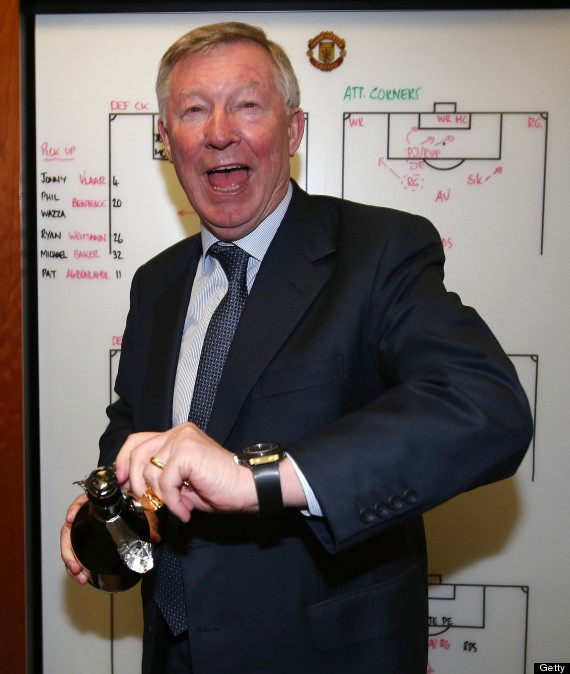
Sir Alex Ferguson has finally decided to step down as
manager of Manchester United. As an Arsenal fan, I’m not too sentimental.
I appreciate the fact that a change in management could
remove Man U from its perennial place among the Premierships apex, and it
pleases me that the Red Devils faithful must be pretty nervous right now, however,
I don’t really welcome this news with any type of euphoria. Instead, I find
myself indifferent yet slightly curious as to who will take his place.
It will be very difficult to replace a man who achieved so
much in England’s top flight over a very long career.
His biggest accomplishment in my opinion was getting
knighted. However more accurately, it was probably his winning longevity in
arguably the most competitive league in the world. From 1986 until now,
Ferguson has consistently remained competitive and successful in a game that
has continuously evolved and changed.
It is very easy for managers and even players to get lost in
the evolution of sports. With new technology, scientific advancements, and new
ways to think about the way the game is prepared and played, Sir Alex has not
only survived, but he has prospered while many of his ‘old boy’ counterparts
have faded away due to their archaic beliefs and philosophies.
He has done this by remaining open and receptive to change.
Sir Alex continually modifies and augments his backroom staff with people and systems
that provide dividends. In addition, he delegates many of his responsibilities
with respect to training and preparation to those with the most current
knowledge and proven methods, ensuring his teams are at pace or ahead of the
competition.
While his cohorts have remained resistant, defensive, and
afraid of change, Ferguson has welcomed it and utilized it to procure his longevity
and perpetual success.
His prolonged existence at one of the most decorated clubs
in Europe has not only come from his willingness to adapt, but also from his
ability to manage personalities.
Throughout his career, Sir Alex has had to evoke the best
out of some of the strangest and dim witted footballers on the globe.
He took Eric Cantona when France literally spit him out and
made him into a legend.
He turned Cristiano Ronaldo into a star before he went on to
the bright lights and tapas bars of Madrid and became ‘sad’.
He manages Wayne Rooney. I don’t even know if I could
understand Rooney let alone tell him how to play football.
At the highest level of the game, the players and their egos
make it difficult to provide an harmonious and effective on-field product, yet
Ferguson has managed to do it with great success and he has always known when
to let those egos and the players they come with go.
Sir Alex has seen plenty of superstars under his helm and
with only a few exceptions, he has always milked them for their best, and
passed them on right before their inevitable decline.
He sold Beckham when his best football was past him and Posh
Spice made him worry more about clothes and changing his hair than the pitch.
He used Andy Cole and Dwight Yorke brilliantly before
shipping them off when he realized they couldn’t perform at their pinnacle.
Like all managers he’s made some bad judgments on incoming
players (i.e. Dimitar Berbatov), however he’s succeeded much more than he’s
faltered. The discovery of Ronaldo alone should default all his errors.
In all likelihood, the aforementioned principles in his
departure will be overshadowed with his additions to Manchester United’s trophy
cabinet.
In his 27 years as manager, Sir Alex Ferguson has amassed 38
trophies and made Man U England’s most decorated domestic club, robbing
Liverpool of it’s long held English superiority.
He has been a great manager for many reasons. Manchester
United will miss him, their fans will miss him, the game might even miss him,
but I won’t. Unless of course he wants to manage Arsenal, in which case I’ll
love him.
On April 22nd, Robin Van Persie won his first
title with Manchester United in a 3-0 win over Aston Villa at Old Trafford. He
scored all three goals in the game, including an exquisite long-range volley
that will feature in countless Youtube videos for years to come and undoubtedly
be heralded as the goal of the season.
After the final whistle had been blown, Van Persie joyously
celebrated along with his teammates, lifting the coveted EPL trophy for the
first time in his career, and parading around the pitch proudly brandishing a
black and red scarf that looked like it was knit in hell.
For Arsenal fans, this was the equivalent of being kicked in
the sternum, punched in the stomach, slapped in the face with a wet hand, and
then having old leftover food thrown at you while writhing on the ground in
pain and humiliation.
When Arsene Wenger sold Arsenal’s best player to rivals
Manchester United in the summer of 2012, the initial assessment was that the
‘smarter than thou’ Frenchman had essentially conceded defeat and handed Man U
the title.
The initial assessment was correct.
In selling Robin Van Persie, Wenger gave the red devils the
EPL’s best striker to an already formidable team, and pretty much laid out a
red carpet to Monday’s bullshit party in Manchester.
What has made Van Persie’s achievement with Man U even more
difficult for the Gunners faithful, has been his impeccable performance
throughout the year.
Van Persie has arguably played the best season of his
career. He leads the Premiership in scoring and has been an offensive
juggernaut for Man U, not only racking up goals with incredible technique,
talent, and skill, but also setting them up beautifully and efficiently.
His simple presence on the roster instilled an amplified
level of confidence in the whole team, helping them perform above what was
originally expected of them this season. The best simply make those around them
better. You take the best player in any league and put them on a good team,
naturally everyone will believe they are initially better without even having
played their first game.
Moreover, his superb movement and ability to read the game
receives enhanced attention from all opposing defenders, opening space for
everyone else to be successful. Ask anyone who played with him at Arsenal, I’m
sure they will sourly tell you that with Robin on the team, there was much more
room and time to run out of ideas before you pass it back to Per Matersacker
and the defense play keep away and pose no offensive threat on their opponents
while Wenger spills unmarked bottled water all over that hideous caterpillar
jacket he wears, in exasperation.
Van Persie’s success also burns with the sting of a pissed
off bee because Arsenal supporters were incredibly patient with him, and just
as their patience was being rewarded with remarkable results, he was sold to
the highest bidder.
In 8 seasons with the Gunners, Van Persie averaged 24 games
a season, appearing in all games just once – his last year with Arsenal.
Throughout his tenure with the North London club, Van Persie was oft injured
and unavailable due to his long list of ailments. He was always exceptionally
talented and played extremely well, it’s just that, he didn’t play that often.
Yet fans waited anxiously and knew that when he stayed healthy he would show
them their faith and allegiance was not in vein.
That year came, and he played a brand of football for the
Gunners that hasn’t been seen from a striker since Theirry Henry left for the
sunny beaches of Catalonia. He scored astounding goals, was a true leader, gave
fans a new hope of a possible turnaround of fortunes, and then he left.
He joined a painfully long list of Arsenal players who were
developed with patience and precision, played incredibly well once matured, and
then went on to win silverware with teams with deeper pockets, or at least, more
determination than Wenger and the crack staff of Arsenal’s board and ownership
have shown.
Fundamentally, I am bitter that Van Persie won with another
team, but I am not angry at him because he left. Football is a business like
any other. Van Persie saw an opportunity to be successful with another
organization and make more money. Anybody in a similar position in any other
business would do the same. However if you’re an Arsenal supporter, it stings,
and knowing Wenger and his associates’ brand of self-sufficiency and economics,
their response will most likely be more frugality in the transfer market, or to
once again, sell their best player this past season.
It doesn’t make sense, does it? Well neither does selling
your best asset to your rivals and not replacing them.